Ways to Improve Job Search Farming Skills
The agricultural labor market presents a unique landscape for job seekers. Finding a position in this sector involves navigating a variety of specialized strategies and understanding underlying trends. This exploration seeks to arm potential employees with the knowledge needed to enhance their job search in agriculture.
Mastering Key Farming Skills
Key farming skills include problem-solving, interpersonal, farm management, and organizational skills. You can use these skills in a variety of ways, from communicating with farmhands to tending crops and repairing machinery. Understanding these skills is essential to succeed in most, if not all, farm jobs.
Boost Your Career with Essential Farming Skills
- Critical thinking: This skill enables farmers to make informed decisions about crop management, soil quality, and pest control.
- Communication: Good communication is essential for working with farmhands, suppliers, and customers.
- Technical skills: Familiarity with farming equipment, tools, and machinery is crucial for efficient farm operations.
- Problem-solving: Farmers must be able to troubleshoot equipment malfunctions, crop diseases, and other issues that arise.
- Adaptability: Farmers must be flexible and willing to adapt to changing weather conditions, market trends, and other factors.
- Work ethic: A strong work ethic is essential for meeting deadlines, completing tasks, and maintaining a safe working environment.
- Attention to detail: Farmers must be meticulous in their work, paying close attention to soil quality, crop health, and equipment maintenance.
Highlighting Your Skills on Your Resume
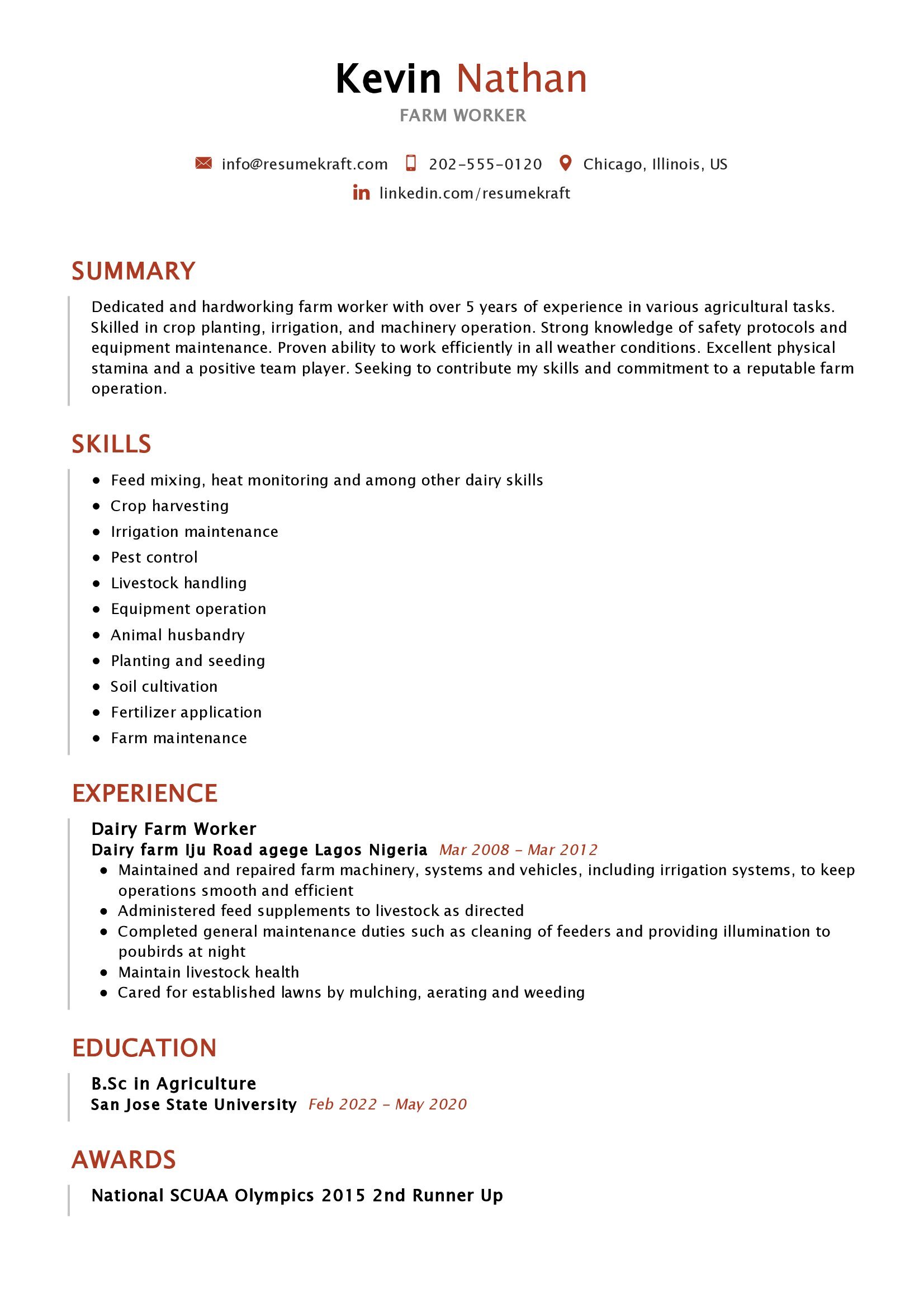
A well-written farmer's resume helps you show potential employers that you're the best candidate for the job. To highlight your skills on your resume, use specific examples of your experience and training. For instance:
- "Operated a tractor to plant and harvest crops, ensuring timely completion of tasks and maintaining equipment efficiency."
- "Managed a team of farmhands, providing guidance and support to ensure successful crop yields and efficient farm operations."
- "Developed and implemented a soil conservation plan, reducing erosion and improving soil health."

Developing Your Skills Through Training and Experience
To improve your job search farming skills, consider the following:
- Take courses or attend workshops on farming techniques, equipment operation, and business management.
- Gain experience working on a farm or in a related field, such as agriculture sales or crop consulting.
- Volunteer or intern on a farm to gain hands-on experience and build connections in the industry.
- Join industry associations or networking groups to stay up-to-date on industry trends and best practices.
Job Search Strategies for Farming Professionals
Job searching can be overwhelming and exhausting. Follow these 6 tips to help you improve your agriculture job search:
- Schedule regular job search sessions to stay focused and motivated.
- Update your resume and online profiles to showcase your skills and experience.
- Network with industry professionals to learn about job opportunities and best practices.
- Customize your application materials for each job opening, highlighting relevant skills and experience.
- Prepare for interviews by researching the company, practicing your responses to common questions, and preparing examples of your work.
- Stay organized and keep track of job openings, deadlines, and follow-up communications.
Conclusion
Agriculture is a challenging and rewarding field that requires a diverse set of skills. To excel in most, if not all, farm jobs, you need to have strong critical thinking, communication, technical, problem-solving, adaptability, work ethic, and attention to details skills. By mastering these key farming skills and developing your skills through training and experience, you can improve your job search farming skills and increase your chances of landing a successful farming career.








:max_bytes(150000):strip_icc()/top-skills-every-professional-needs-to-have-4150386-Final-edit-d92173b469784eb38c1412f90e077d71.jpg "Maui Now")