Gaming Addiction Treatment Options: Finding a Path to Recovery
Gaming has become an integral part of our lives, providing entertainment and social connection. However, for some individuals, gaming can cross the line into compulsive behavior, negatively impacting their relationships, work, and overall well-being. Recognizing the signs of gaming addiction and seeking professional help is crucial for recovery. In this article, we will explore the best gaming addiction treatment options, helping you or a loved one find a path to a healthier lifestyle.
Understanding Gaming Addiction
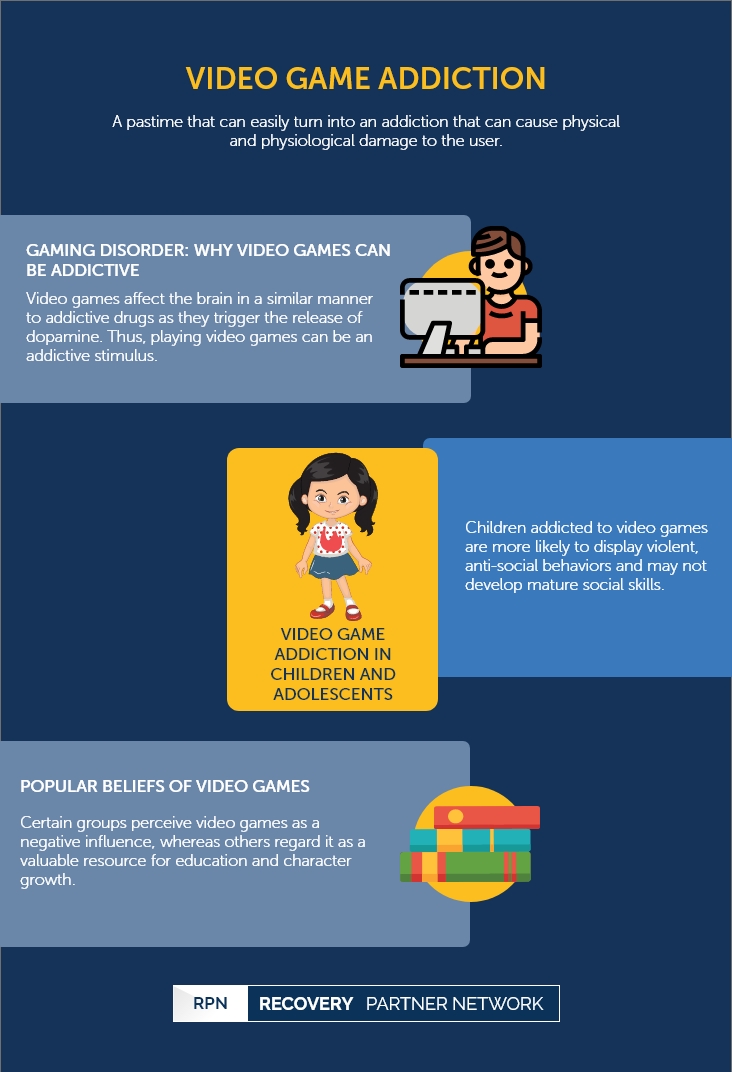
Gaming addiction, also known as Internet Gaming Disorder (IGD), is a clinically recognized condition affecting 3-4% of gamers worldwide. It is characterized by impaired control over gaming, leading to significant personal and social impairment. Research shows that gaming addiction is not just an impulse control issue but a complex problem involving neurological, emotional, and psychological factors.
Signs and Symptoms of Gaming Addiction
The symptoms of gaming addiction include:
- Preoccupation with gaming, constantly thinking about gaming or the next gaming session
- Withdrawal symptoms when not playing, such as irritability, anxiety, or restlessness
- Unsuccessful attempts to reduce playing time or stop gaming altogether
- Continued excessive gaming despite negative consequences, such as strained relationships, poor job performance, or neglect of responsibilities
Effective Treatment Options for Gaming Addiction
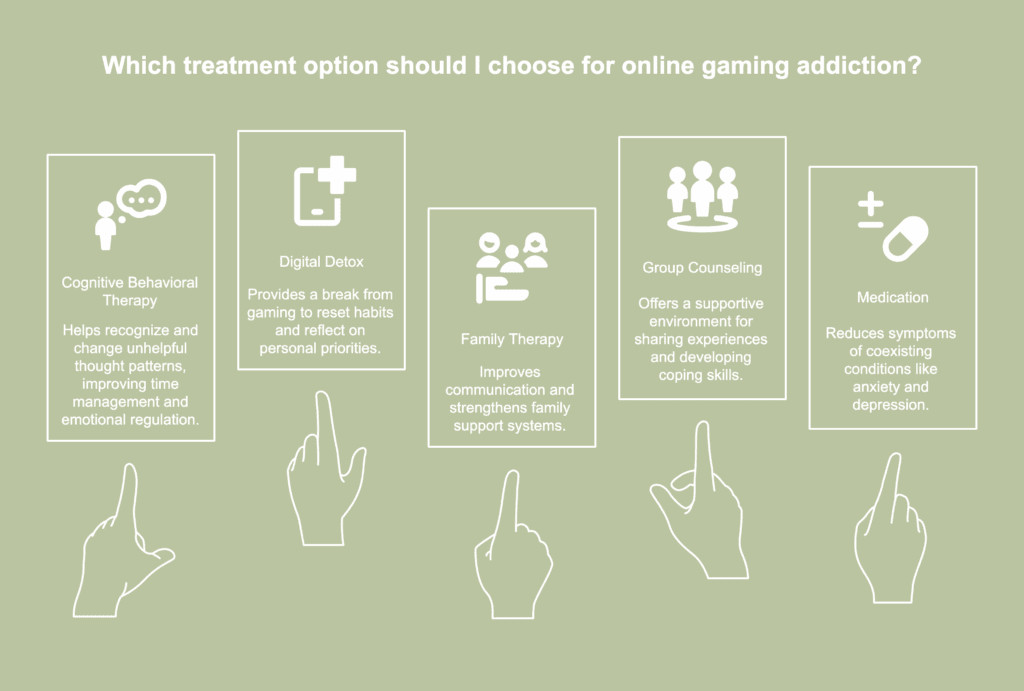
The two main treatment options for gaming addiction are psychotherapy approaches and a combination of medication and counseling. Psychotherapy, also known as talk therapy, is the primary treatment option for gaming addiction. Cognitive-behavioral therapy (CBT) has emerged as one of the most effective approaches, focusing on changing unhealthy thought patterns and behaviors associated with excessive gaming.
Additional Treatment Options for Gaming Addiction

While psychotherapy is the primary treatment option, some individuals may benefit from additional treatment options, such as:
- Prescription medications that address specific symptoms, such as depression, anxiety, or ADHD
- Support groups, either in-person or online, providing a safe space to share experiences and connect with others who understand the challenges of gaming addiction
- Family therapy, helping loved ones understand and address issues related to gaming addiction
Professional Help for Gaming Addiction
Seeking professional help is often the first step for someone facing a severe gaming problem. A mental health professional can assess the individual's situation, develop a personalized treatment plan, and provide ongoing support throughout the recovery process. Some treatment centers offer specialized programs for gaming addiction, combining psychotherapy with medication and other therapies.
Support Resources for Gaming Addiction Treatment
If you or someone you know is struggling with gaming addiction, there are several effective support options available:
- Professional help from mental health professionals or addiction specialists
- Specialized treatment centers offering inpatient, outpatient, or residential programs for gaming addiction
- Online support groups and forums, providing a safe space to share experiences and connect with others
- Mobile apps and online resources offering structured internet-based programs and telephone visits with a mental health professional
Conclusion
Gaming addiction is a real and treatable condition that requires professional help. By recognizing the signs and symptoms of gaming addiction and seeking support, individuals can find a path to recovery and a healthier lifestyle. This article has provided an overview of the best gaming addiction treatment options, including psychotherapy approaches, medication and counseling, and additional treatments such as support groups and family therapy. If you or someone you know is struggling with gaming addiction, take the first step towards recovery today.