Python Programming for Big Data: Unlocking Efficiency and Insights
The Rise of Python in Big Data
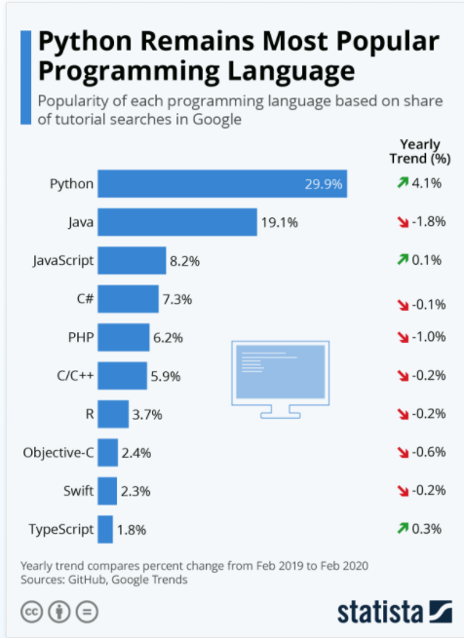
In today's data-driven world, the ability to handle, analyze, and extract insights from large-scale datasets is crucial. Python has emerged as one of the most popular programming languages in the big data ecosystem. Its simplicity, readability, and vast collection of libraries make it an ideal choice for data scientists, analysts, and engineers working with big data.
Key Libraries for Big Data Analysis with Python
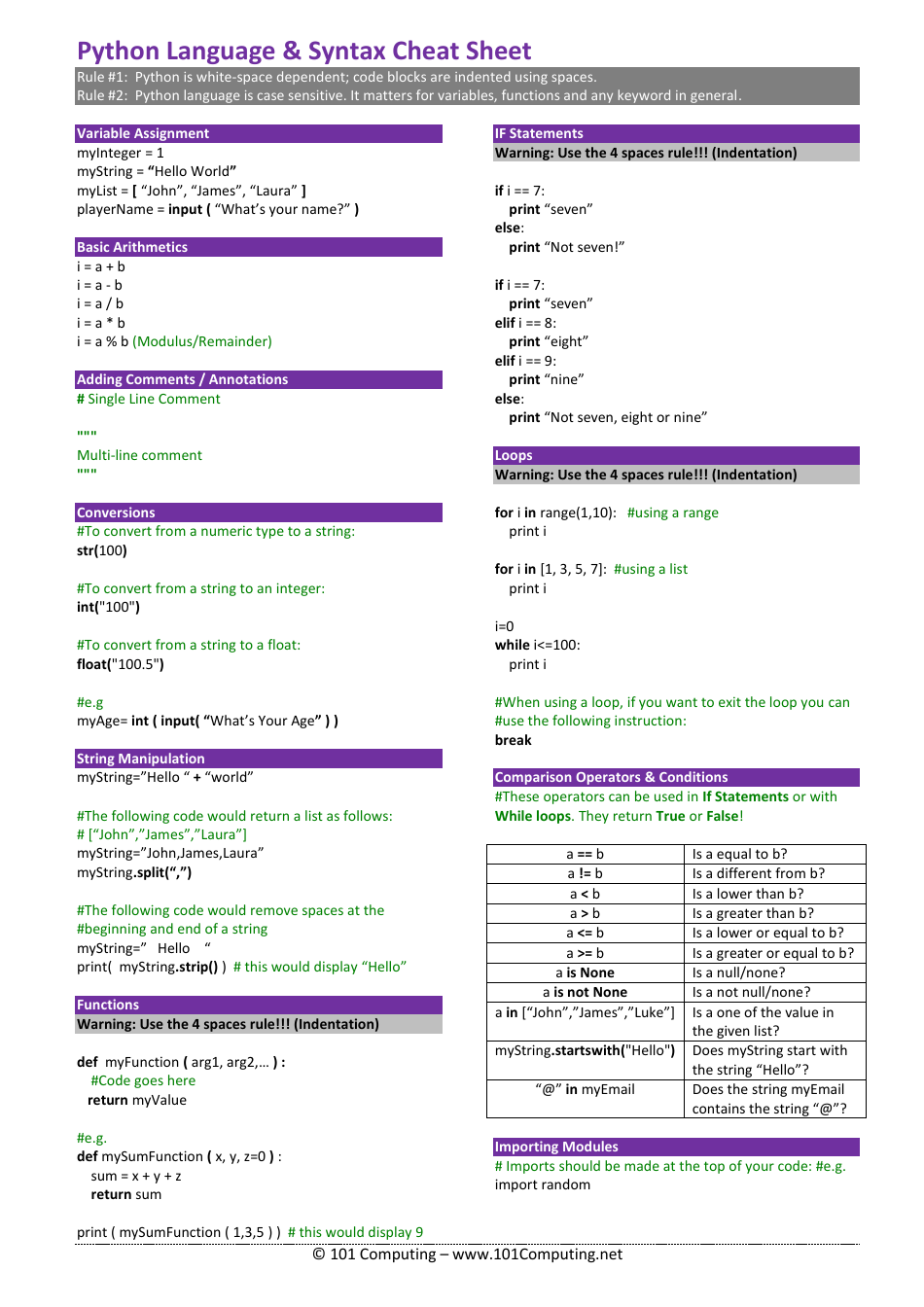
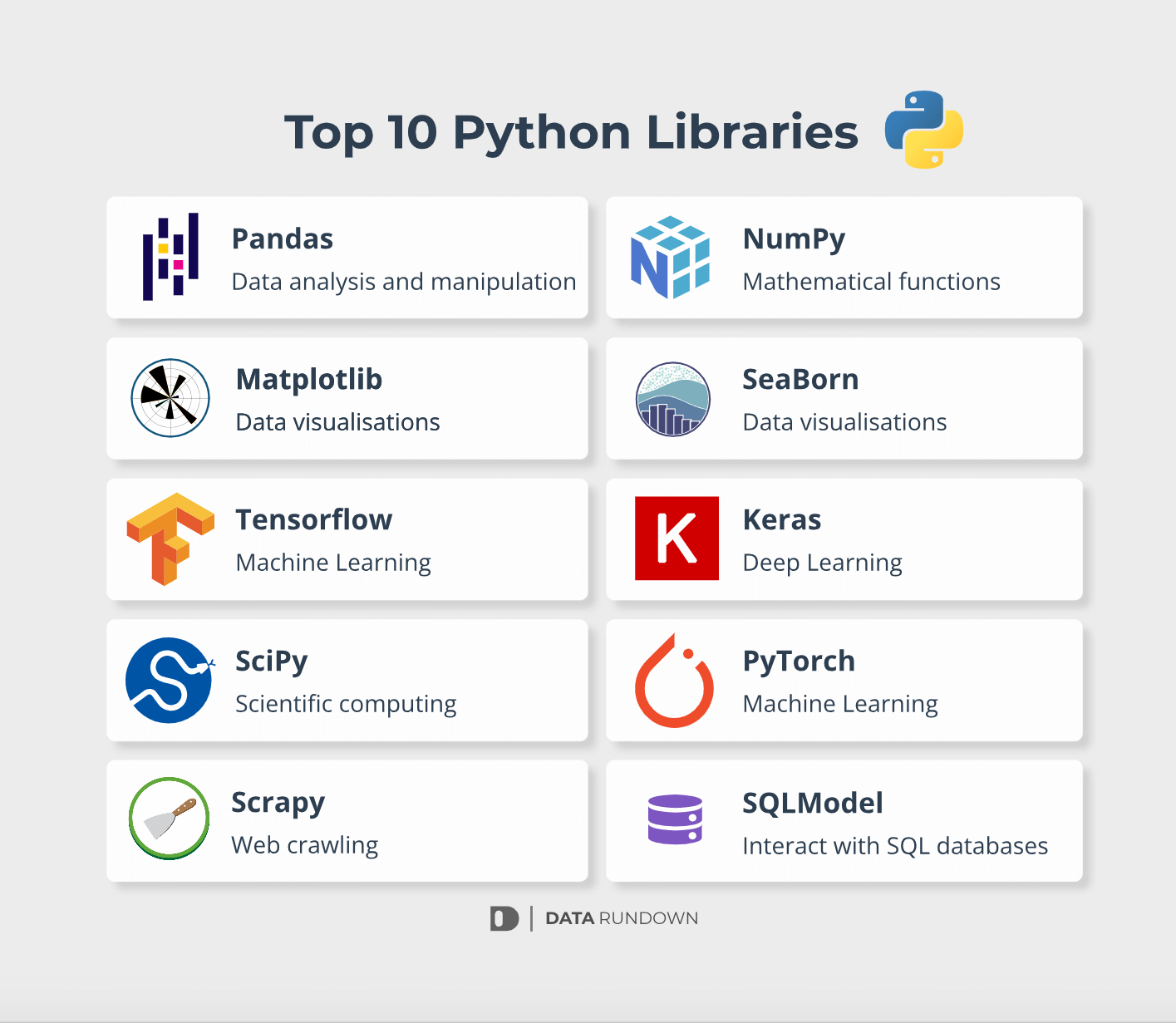
- Pandas: A powerful library for data manipulation and analysis, providing data structures such as Series (1-dimensional labeled array of values) and DataFrame (2-dimensional labeled data structure with columns of potentially different types).
- NumPy: A library for efficient numerical computation, providing support for large, multi-dimensional arrays and matrices, along with a wide range of high-level mathematical functions.
- Matplotlib: A plotting library that provides a comprehensive set of tools for creating high-quality 2D and 3D plots, charts, and graphs.
- SciPy: A library for scientific computing, providing functions for scientific and engineering applications, including signal processing, linear algebra, optimization, statistics, and more.
- PySpark: The Python API for Apache Spark, designed for big data processing and analytics, allowing developers to write Spark applications using Python.
The Power of PySpark
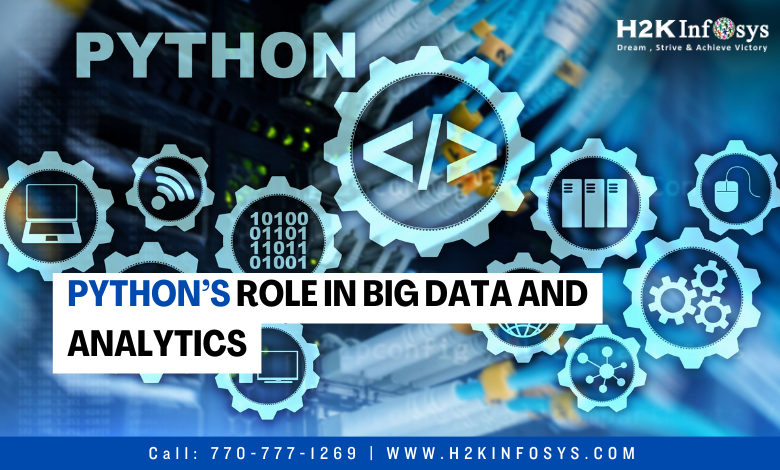
PySpark combines Python's learnability and ease of use with the power of Apache Spark to enable processing and analysis of data at any size for everyone familiar with Python. PySpark supports all of Spark's features, including Spark SQL, DataFrames, Structured Streaming, Machine Learning (MLlib), Pipelines, and Spark Core.
Real-World Applications of Python Programming for Big Data
- Data Analysis and Visualization: Python's libraries such as Pandas, NumPy, and Matplotlib make it an ideal choice for data analysis and visualization, allowing data scientists to extract insights from large datasets and communicate their findings effectively.
- Machine Learning and AI: Python's libraries such as Scikit-learn, TensorFlow, and Keras provide a comprehensive set of tools for building and training machine learning models, enabling developers to create intelligent systems that can learn from data and make predictions or decisions.
- Big Data Processing and Analytics: PySpark's ability to process large datasets in parallel across clusters makes it an ideal choice for big data processing and analytics, allowing developers to extract insights from large datasets in a timely and efficient manner.
Conclusion
Python programming for big data offers a wide range of benefits, including efficiency, scalability, and flexibility. With its simplicity, readability, and vast collection of libraries, Python has become an ideal choice for data scientists, analysts, and engineers working with big data. Whether you're interested in data analysis and visualization, machine learning and AI, or big data processing and analytics, Python programming for big data has the potential to unlock new insights and drive business growth.




![70+ Python Projects for Beginners [Source Code Included]](https://styles.redditmedia.com/t5_2qh0y/styles/communityIcon_mkayghu1502d1.png "70+ Python Projects for Beginners [Source Code Included]")