How to Learn Python JSON Parsing
JSON (JavaScript Object Notation) is a lightweight, easy-to-read data interchange format that is widely used in web development, data exchange, and storage. As a Python developer, knowing how to parse, manipulate, and generate JSON data is essential for working with APIs, configuration files, database exports, and other data exchange formats. In this article, we will cover the basics of Python JSON parsing and provide a comprehensive guide on how to efficiently parse JSON data in Python using the json module.
What is JSON Parsing?
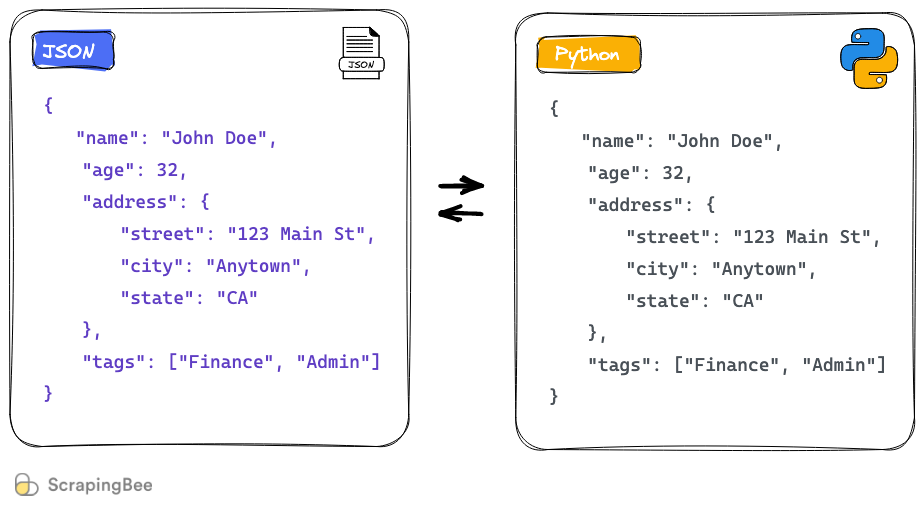
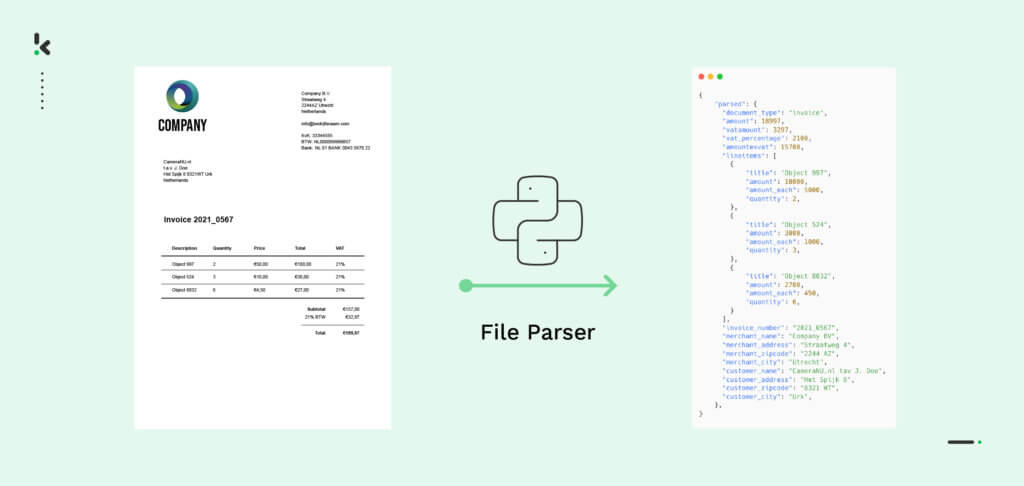
JSON parsing is the process of converting JSON data into a Python object, such as a dictionary or a list. This is done using the json module, which provides functions for parsing, serializing, and deserializing JSON data. The json module is a built-in module in Python, making it easy to work with JSON data without the need for external libraries.
Python JSON Parsing Basics
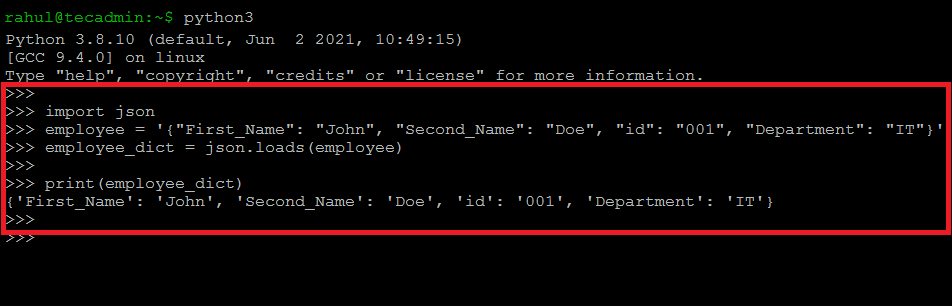
Before diving into more advanced topics, let's cover the basics of Python JSON parsing. The most common way to parse JSON data in Python is using the json.loads() function. This function takes a JSON string as input and returns a Python object, such as a dictionary or a list.
Example: Parsing a JSON String
Let's say you have a JSON string like this:
```json {"name": "John", "age": 30, "city": "New York"} ```You can parse this string into a Python dictionary using the json.loads() function like this:
```python import json json_string = '{"name": "John", "age": 30, "city": "New York"}' data = json.loads(json_string) print(data) # Output: {'name': 'John', 'age': 30, 'city': 'New York'} ```Working with JSON Files
One common use case for JSON parsing is working with JSON files. You can use the json module to read and write JSON data to files. Here's an example of how to read a JSON file using the json.load() function:

Handling Nested Data
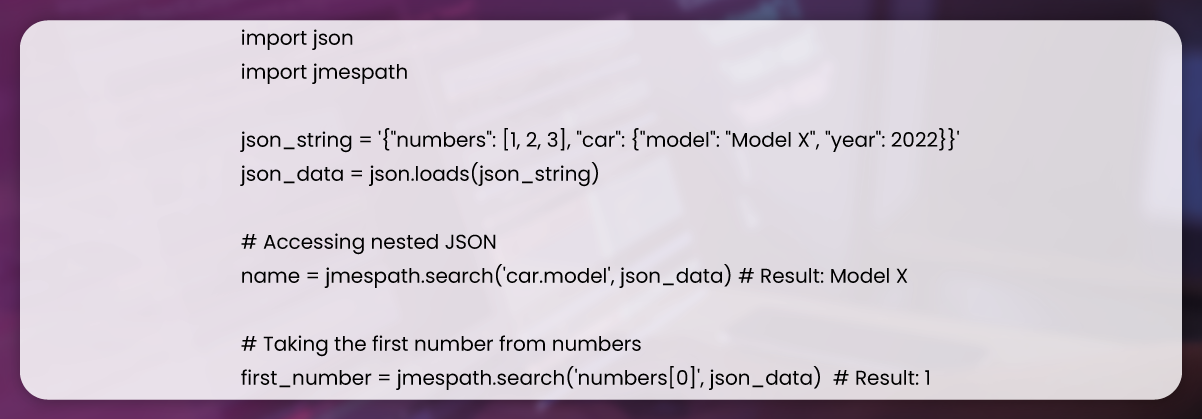
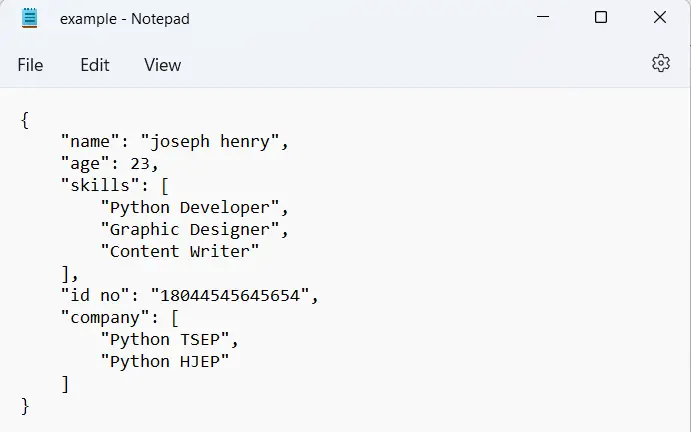
JSON data can be nested, meaning it can contain sub-objects or arrays. To handle nested data, you can use the json.loads() function to parse the JSON string into a Python object, which can then be accessed like a nested dictionary or list.
```python import json json_string = '{"name": "John", "age": 30, "city": {"state": "New York", "zip": 10001}}' data = json.loads(json_string) print(data['city']) # Output: {'state': 'New York', 'zip': 10001} ```Working with API Responses
JSON parsing is often used when working with APIs, which typically return data in JSON format. To parse API responses, you can use the json.loads() function to convert the JSON string into a Python object.
```python import requests import json response = requests.get('https://api.example.com/data') data = json.loads(response.text) print(data) # Output: {'results': [{'id': 1, 'name': 'John'}, {'id': 2, 'name': 'Jane'}]} ```Conclusion
JSON parsing is an essential skill for any Python developer working with data exchange formats like JSON. In this article, we covered the basics of Python JSON parsing and provided examples of how to work with JSON data using the json module. Whether you're working with API responses, configuration files, or database exports, knowing how to parse, manipulate, and generate JSON data is crucial for efficient and effective data processing.
Further Reading
For more information on Python JSON parsing, including advanced topics and best practices, check out the following resources: