FOMO and its Effects on Workplace Dynamics
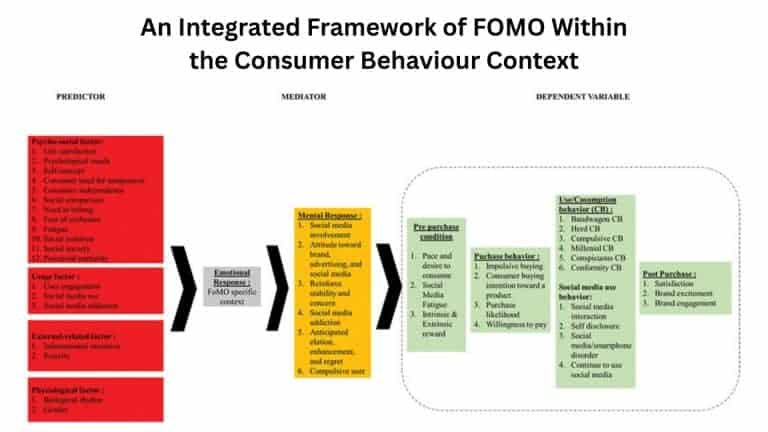
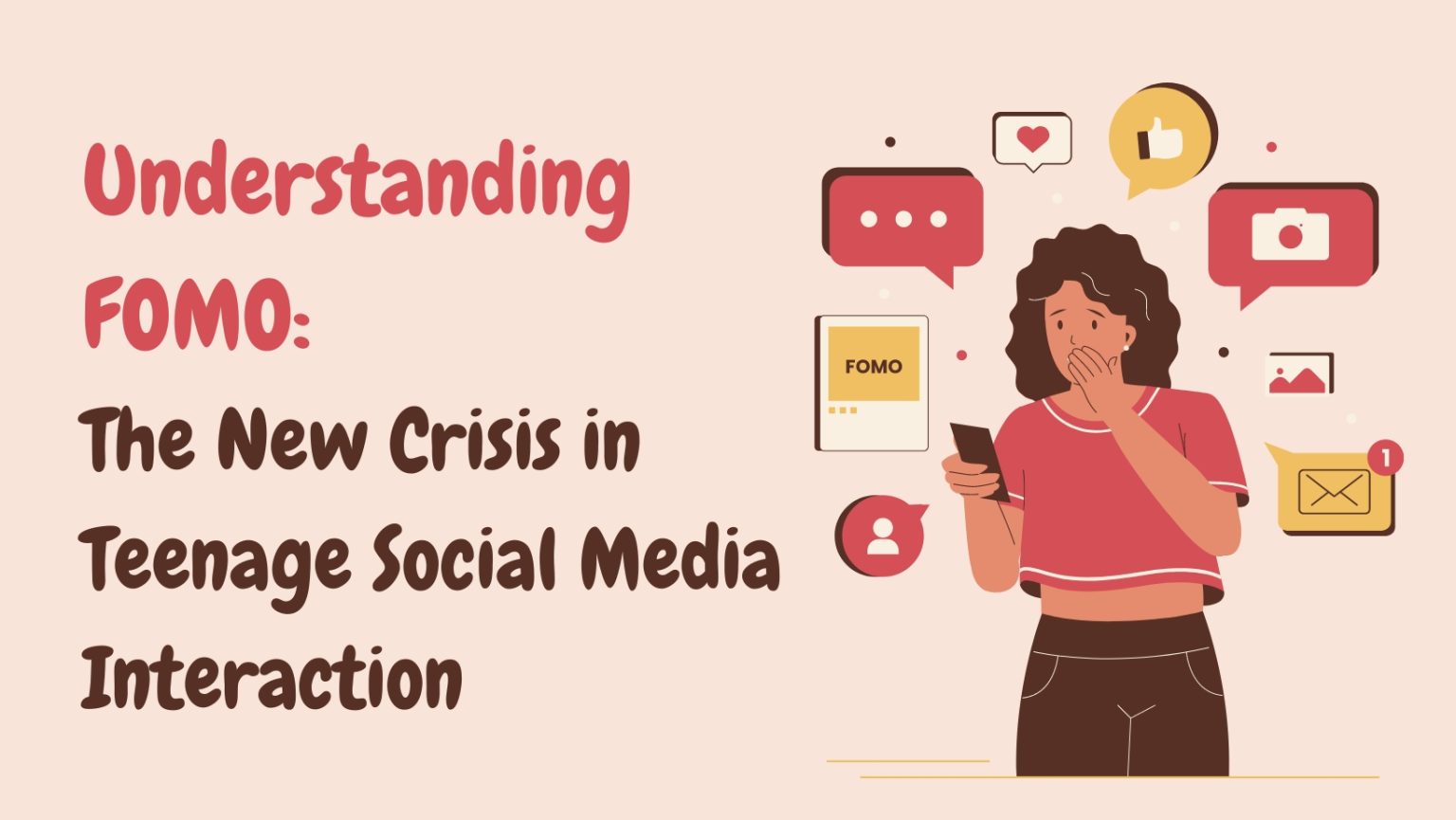
The concept of Fear of Missing Out (FOMO) has become increasingly relevant in today's digital age. It refers to the anxiety or apprehension that individuals experience when they think others might be having fun or experiencing something exciting, and they are not. In the workplace, FOMO can manifest in various ways, leading to a range of negative effects on productivity, organizational culture, and employee well-being.
What is FOMO in the Workplace?
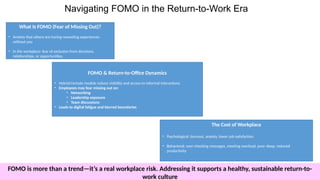
In the context of the workplace, FOMO can be experienced by employees when they worry that they are not part of important conversations, missing out on key projects, or being overlooked for promotions or recognition. This fear can lead to a range of negative effects, including:
- Decreased productivity: Constantly checking social media or feeling the need to be part of every conversation can lead to decreased productivity and a decline in work quality.
- Increased stress and anxiety: The fear of missing out can lead to increased stress and anxiety levels, which can negatively impact one's mental health and well-being.
- Decreased job satisfaction: Feeling left out of important conversations or missing out on promotions or recognition can lead to decreased job satisfaction and a decline in employee morale.
- Poor communication: FOMO can lead to poor communication among team members, as individuals may feel the need to constantly share their work or updates to avoid feeling left out.
How to Mitigate the Effects of FOMO in the Workplace
While FOMO can have negative effects on the workplace, there are several strategies that organizations can implement to mitigate its effects:
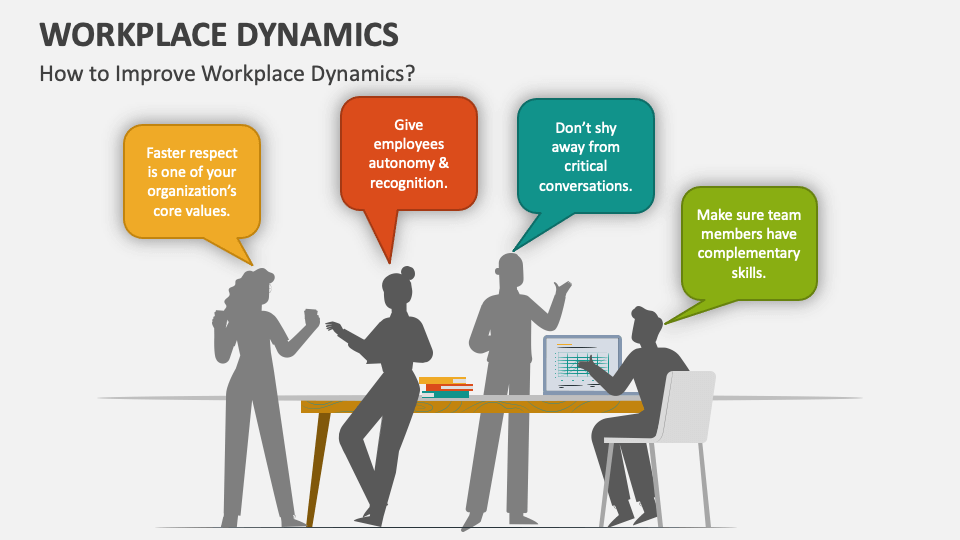
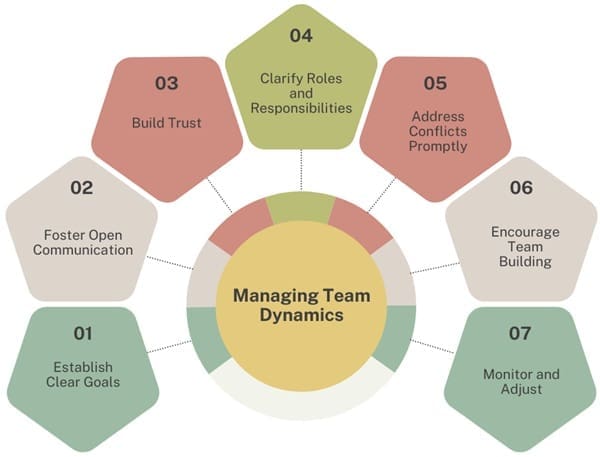
- Set clear expectations: Clearly communicate expectations and goals to employees to reduce the fear of missing out on important information or opportunities.
- Encourage open communication: Foster an open communication culture where employees feel comfortable sharing their work, updates, and ideas without feeling the need to constantly share their work on social media.
- Provide regular feedback: Regular feedback can help reduce the fear of missing out on recognition or promotions, and provide a sense of accomplishment and job satisfaction.
- Implement social media policies: Establish social media policies that discourage the use of social media during work hours or set guidelines for sharing work-related information on personal social media accounts.
Conclusion
FOMO can have significant effects on workplace dynamics, leading to decreased productivity, increased stress and anxiety, decreased job satisfaction, and poor communication. However, by implementing strategies to mitigate its effects, organizations can create a more positive and productive work environment. By setting clear expectations, encouraging open communication, providing regular feedback, and implementing social media policies, organizations can reduce the negative effects of FOMO and foster a more productive and engaged workforce.
References
The term FOMO has become increasingly prevalent in financial markets, particularly in relation to volatile assets like cryptocurrencies, high-growth tech stocks, and during bull markets or asset bubbles. While FOMO is primarily a psychological phenomenon, its effects on financial markets are very real and measurable.
A clinical health psychologist explains how FOMO, or the fear of missing out, has a direct impact on your physical, mental and emotional health.

-768.png "The Effect of")