The Hidden Dangers of Blue Light: Understanding the Risks and Consequences
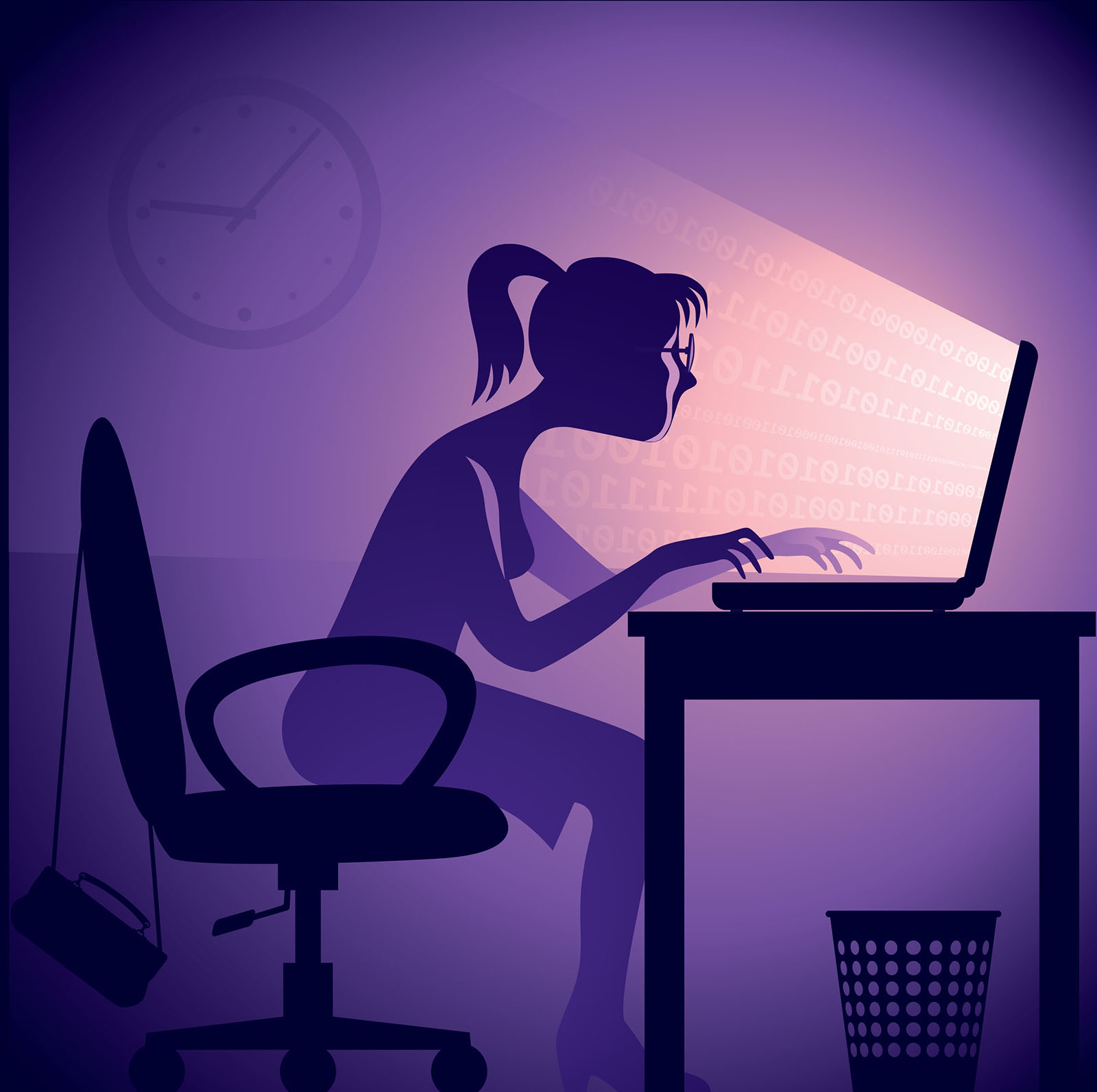
In today's world, we are constantly surrounded by devices that emit blue light, from smartphones and computers to LED lights and televisions. While we appreciate the convenience and connectivity these devices bring, there is a growing concern about the potential harm that blue light exposure can cause to our eyes and overall health. In this article, we'll delve into the science behind blue light, its effects on vision and sleep, and the practical steps you can take to protect your eye health.
What is Blue Light?
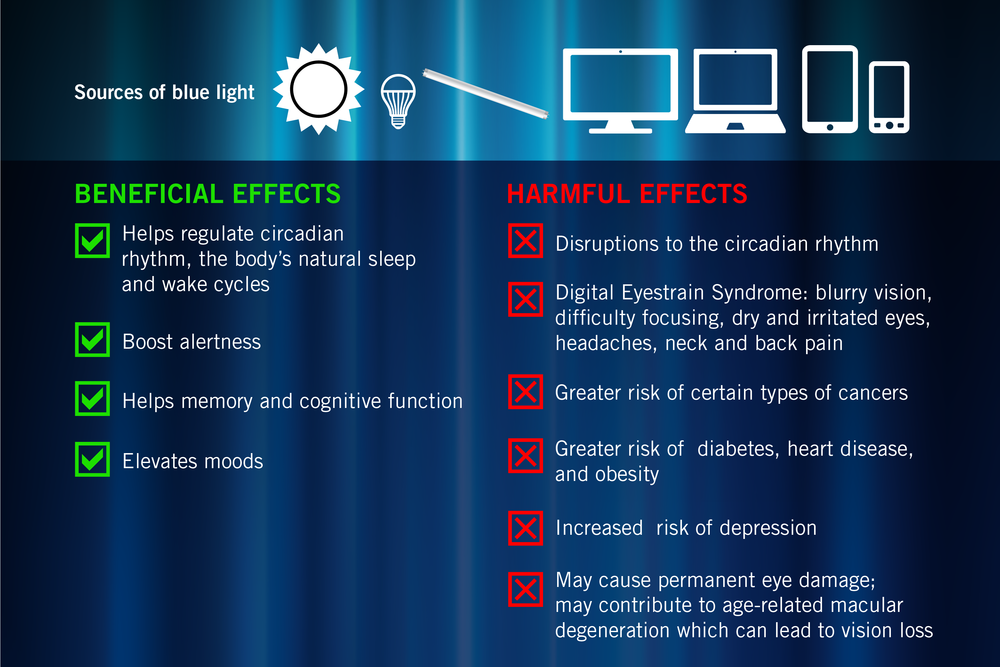
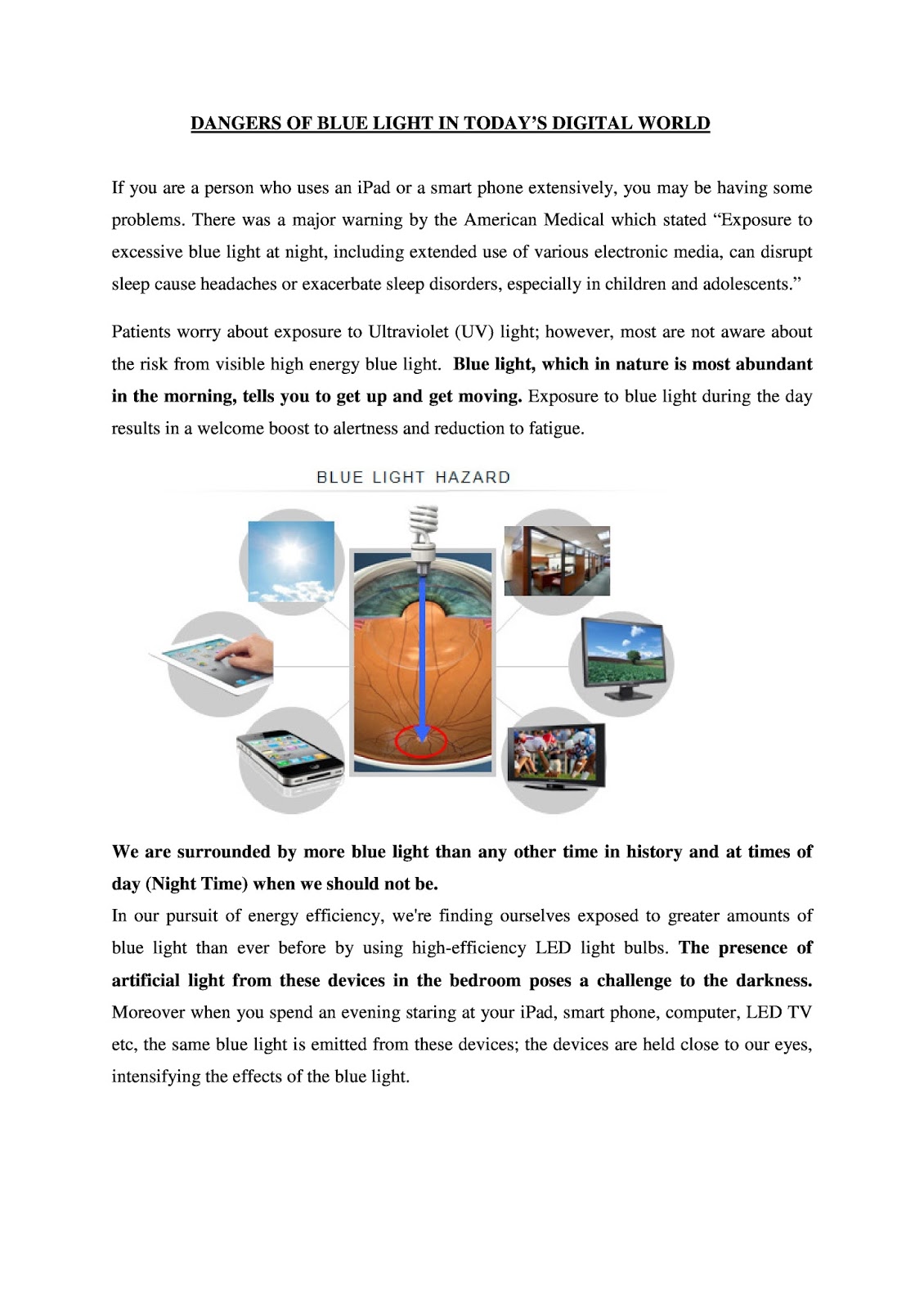
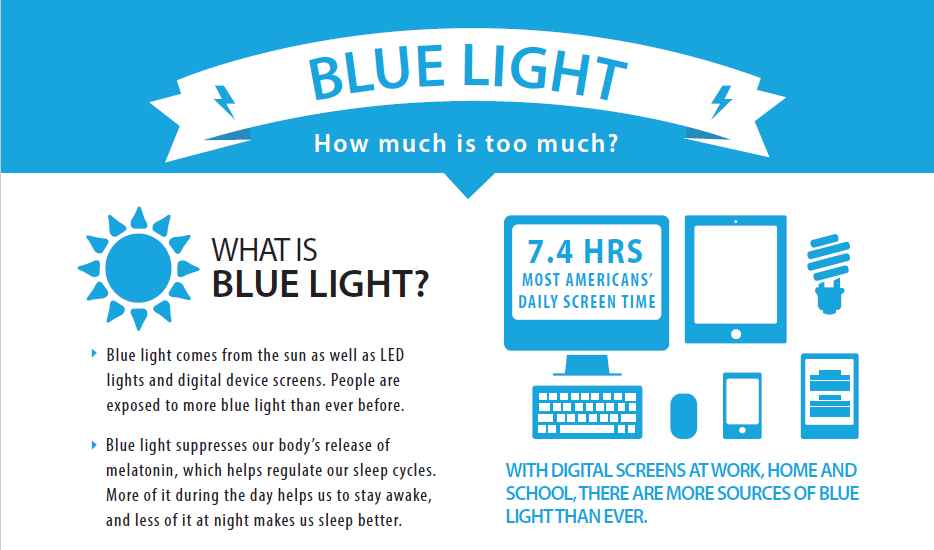
Blue light is a high-energy part of the visible light spectrum, with a wavelength between 400-450 nanometers. It is a key component of natural sunlight, but our exposure to it has increased significantly since the advent of light-emitting diodes (LEDs) and digital devices. Other sources of blue light include fluorescent lights and compact fluorescent light bulbs.
How Does Blue Light Affect Our Eyes?
-
Blue light scatters more easily than other colors, which can cause it to penetrate deeper into our eyes and potentially cause damage to the retina.
-
Our cornea and lens do not block blue light as effectively as they do ultraviolet (UV) rays, making our eyes more susceptible to its effects.
-
Exposure to blue light has been linked to an increased risk of eye diseases, including age-related macular degeneration and cataracts.
The Link Between Blue Light and Sleep Disturbances
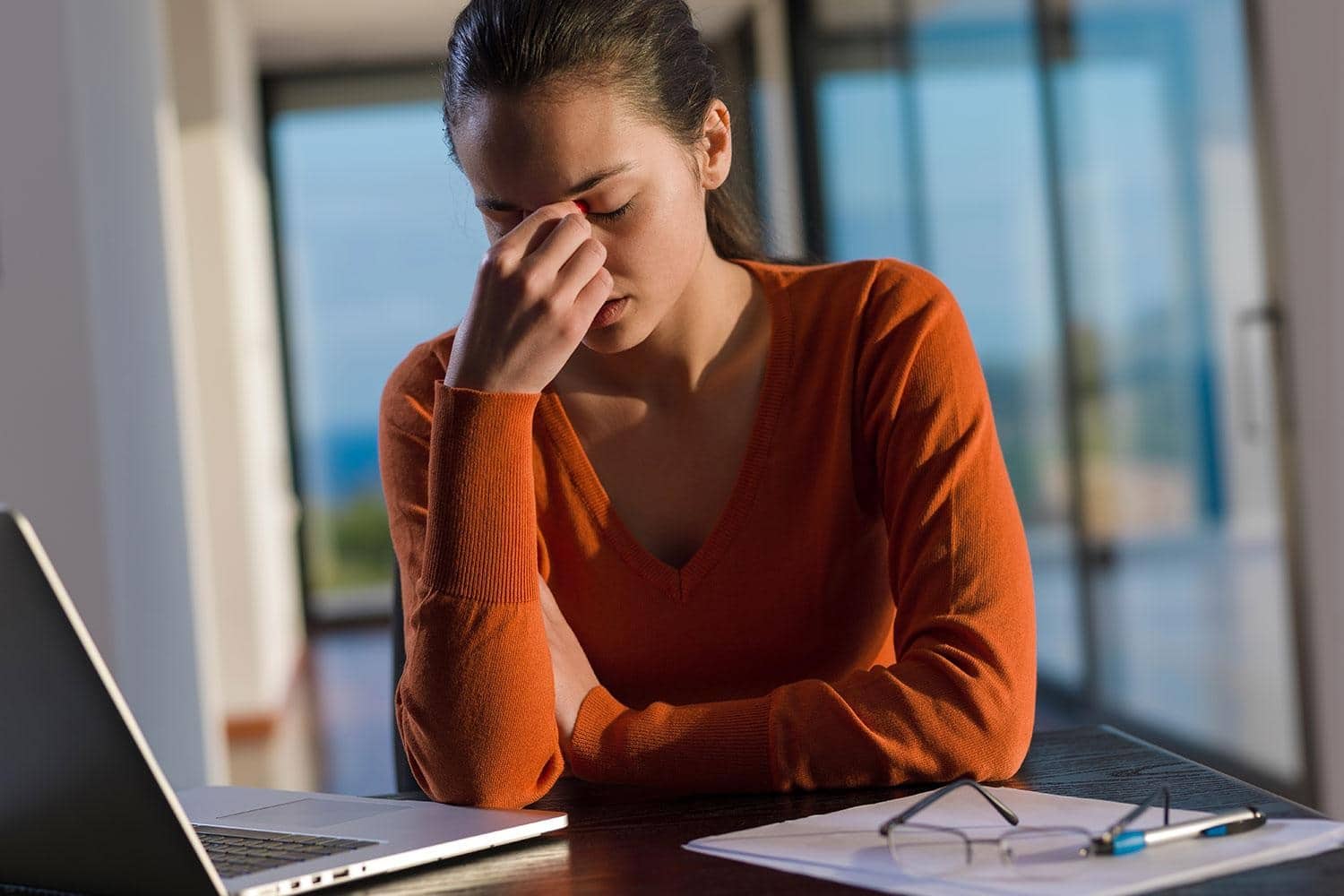
Exposure to blue light in the evening, in particular, can interfere with our sleep patterns. This is because blue light suppresses the production of melatonin, the hormone responsible for regulating our sleep-wake cycles. As a result, we may experience difficulty falling asleep, daytime fatigue, and other related symptoms.
Practical Steps to Reduce Blue Light Exposure
-
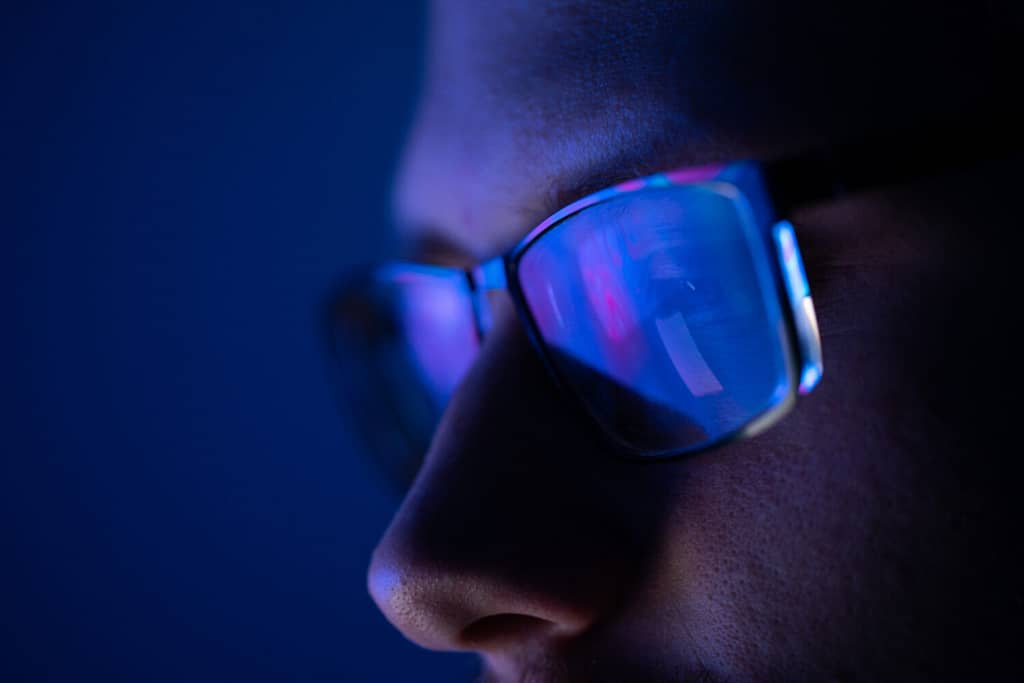
Use blue light filtering glasses or apps on your devices to reduce exposure.
-
Dim the brightness of your electronic devices, especially in the evening.
-
Use good lighting in your home and reduce the use of overhead lighting in the evening.
-
Implement a blue light-free zone in your bedroom and stick to it.
Conclusion
While the science behind blue light exposure is complex, one thing is clear: excessive exposure to blue light can have unintended consequences for our eye health and overall well-being. By understanding the risks and taking practical steps to reduce our exposure, we can minimize the potential harm and enjoy the benefits of technology while protecting our health.
Final Thoughts
It's essential to be aware of the blue light phenomenon and take steps to reduce our exposure, especially in today's world where screens are ubiquitous. By being mindful of our blue light intake, we can safeguard our eye health and enjoy a healthier relationship with technology.