Hyperconnectivity in the Workplace: Understanding the Impact on Productivity and Well-being
In today's digital age, the concept of "hyperconnectivity" has become increasingly relevant, especially in the context of the modern workplace. Hyperconnectivity refers to the seamless interaction between devices, networks, platforms, and people, enabled by advancements such as 5G, IoT, AI, and cloud computing. While it offers numerous benefits, such as enhanced collaboration and increased efficiency, it also poses significant challenges, including mental and physical techno-strain, digital fatigue, and work-related stress.
The Dark Side of Digital Work
The rapid expansion of digital connectivity has led to a culture of constant availability, where employees are expected to be always-on and responsive to work-related communications, even outside traditional working hours. This can result in a loss of productivity, decreased job satisfaction, and adverse effects on mental and physical health.
Understanding the Impact of Hyperconnectivity
Research has shown that hyperconnectivity affects work-to-family conflict and work-to-family conflict leads to adverse health and well-being. Additionally, the direct effect of hyperconnectivity on health and well-being has not been thoroughly investigated, highlighting the need for further research in this area.
Challenges to Work-Life Balance
- Constant availability can create pressure to respond swiftly to work-related communications, even outside of traditional working hours.
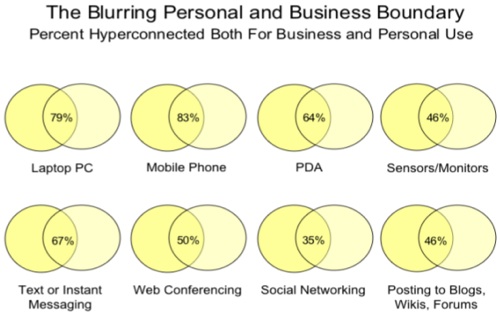
- The blurring of boundaries between work and personal life can lead to burnout and decreased job satisfaction.
- The expectation of constant availability can lead to digital fatigue, decreased productivity, and reduced work-life balance.
Managing Hyperconnectivity in the Workplace
Companies and organizations can take steps to mitigate the negative effects of hyperconnectivity and promote a healthier work-life balance. Some strategies include:
- Establishing clear boundaries and expectations around work hours and availability.
- Implementing digital wellness programs and providing resources for managing digital stress.
- Encouraging employees to disconnect from work-related communications outside of working hours.
- Providing training and support for employees to manage digital fatigue and techno-strain.
The Future of Work: Navigating Hyperconnectivity
As technology advances and the world becomes increasingly hyper-connected, changes to the workplace are inevitable. Companies must adapt to these changes and prioritize the well-being of their employees to maintain productivity and job satisfaction. By understanding the impact of hyperconnectivity and implementing strategies to manage its effects, organizations can create a healthier and more sustainable work environment.
Conclusion
Hyperconnectivity in the workplace presents both benefits and challenges. While it can drive global alignment and increased efficiency, it also carries the risk of digital stress, burnout, and decreased work-life balance. By understanding the impact of hyperconnectivity and implementing strategies to manage its effects, companies can promote a healthier and more sustainable work environment, ultimately driving business success and employee well-being.